Skip to content

A practical philosophical system

Agency against entropy.

AEVITAS examines how people perceive conditions, select conduct, and maintain authorship within real constraints.

“An administered life differs entirely from an authored one.”

Praxis · Ethica · Bellator · Civitas · Mentis

A maintained structure within a degrading field

Structures persist through attention, revision, and repair.

01 / The problem

Untended systems lose form.

Standards drift. Relationships weaken. Capacity recedes. Habits continue after their purpose has disappeared. AEVITAS uses entropy as an analogy for this ordinary deterioration, then asks what deserves maintenance, what needs repair, what should be revised, and what must be allowed to end.
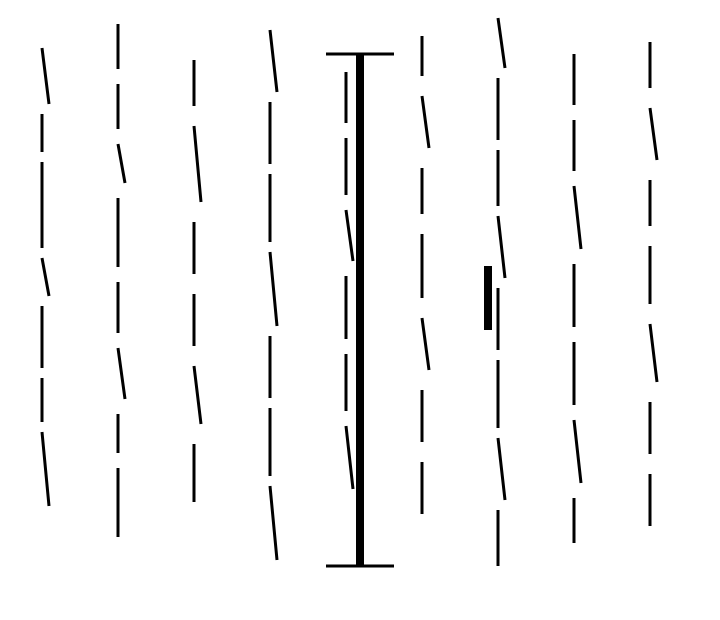
The aim is not command over every outcome. It is authorship within the conditions that exist.

02 / Agency

The central distinction

Control is not Agency.

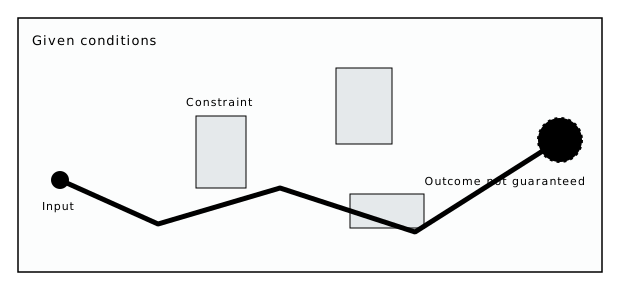
Control seeks command over results. Agency concerns the response a person can actually examine, select, enact, and own inside the conditions that are present.

Control
Tries to command the result.
Agency
Selects and owns a response within available conditions.
Available routes around constraints; outcome not guaranteed
Input
Constraint
Selected route
Outcome not guaranteed

Select an available route

Selected conduct: Revise the structure when evidence shows that conditions—or your understanding of them—have changed.

Selected conduct: Maintain what still serves the chosen standard.

Selected conduct: Release what can no longer be tended responsibly.

Conditions bound part of the field. Agency concerns the routes that remain genuinely selectable; it does not command what follows.

03 / The Interval

The operating domain

The present is where authorship becomes conduct.

Conditions enter the sequence. The Interval keeps perception, evaluation, and selection available before conduct is enacted and its consequences return as evidence.

01
Conditions
02
Interval
Perceive · Evaluate · Select
03
Selected Output
Enact
04
Consequence
05
Integration

Agency operates across the sequence. It shapes selection and conduct; it does not command the consequence.

04 / Architecture

Five Branches

Five functions. One system.

Every deliberate act recruits the whole architecture, although one function may carry more of the burden in a given moment.

05 / Embodiment

A value that never reaches conduct remains an intention.

The first proving ground

The body is where philosophy acquires consequence.

Agency is enacted through a body whose energy, health, fatigue, training, and limitations shape what can be perceived and done. Physical capacity is not a measure of human worth. It is one part of the real condition from which conduct proceeds.

06 / Constructive Strain

Practice at the edge

Capacity grows at a calibrated edge.

A manageable demand slightly beyond present capacity can produce adaptation only when recovery, integration, and honest revision remain part of the cycle.

Too little
Stagnation
01
Calibrated demand
02
Recovery
03
Integration
04
Increased capacity
Too much
Erosion

Constructive Strain requires a manageable demand beyond present capacity, adequate recovery, and evidence-based adjustment. Calibration determines whether strain becomes adaptation.

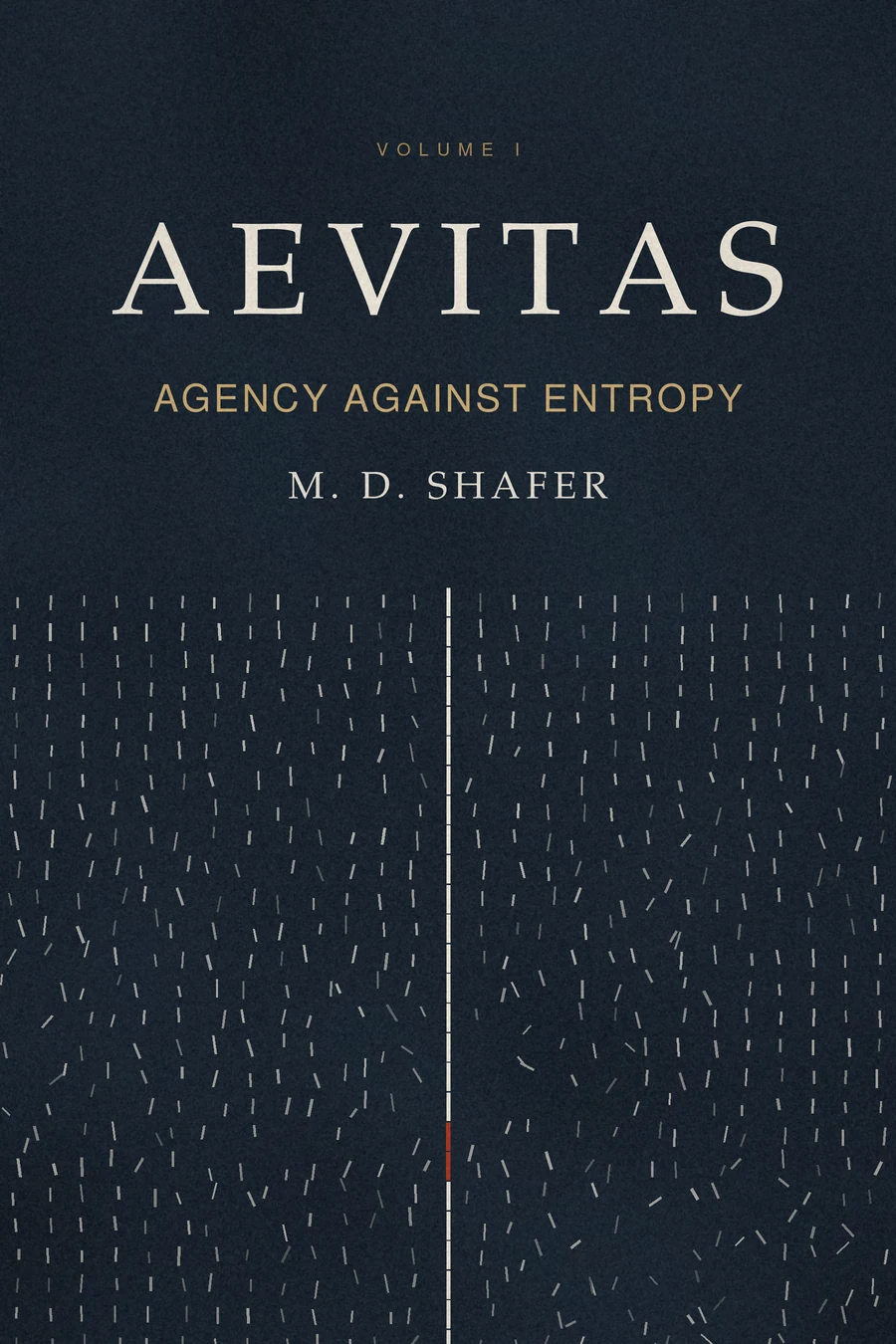
AEVITAS · Volume I

Agency Against Entropy

The first book-length articulation of AEVITAS establishes its doctrine, operating vocabulary, five-branch architecture, and practical consequences.

Author

M.D. Shafer

Publisher

Anthracite Publishing House

Status

Forthcoming · Expected November 2026

Scroll to Top